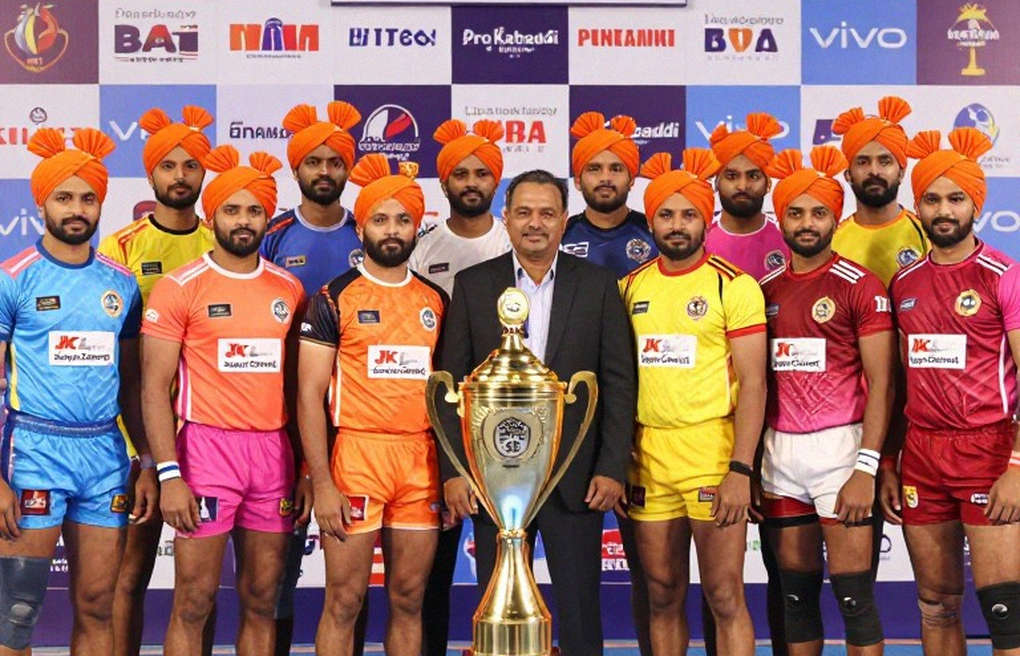
Asian Games 2026: India Beat Chinese Taipei 37-21 to Top Group A, but the Real Story Sits Beneath the Scoreline
**মূল উত্তর** এশিয়ান Games ২০২৬ পুরুষ কবাডিতে ভারত চাইনিজ তাইপেকে ৩৭–২১-এ হারিয়ে গ্রুপ এ-র শীর্ষে অপরাজিত থেকেছে। ভারত তিনবার অল-আউট করলেও পুরো ম্যাচে একবারও অল-আউট হয়নি। সেমিফাইনাল নির্ধারিত ২৫ সেপ্টেম্বর। **মূল তথ্য** - চূড়ান্ত ফল: ভারত ৩৭, চাইনিজ তাইপে ২১; বিরতিতে স্কোর ছিল ২৩–১১। - ভারতের পয়েন্ট: ৩ বোনাস, ৬ অল-আউট, বাকি ২৮ টাচ/ট্যাকল থেকে। - চাইনিজ তাইপের ২১ পয়েন্টের ৯ বোনাস, ৪ দুই সুপার ট্যাকল থেকে। - চাইনিজ তাইপের কলামে অল-আউট পয়েন্ট শূন্য, অর্থাৎ ভারত কখনও অল-আউট হয়নি। - ডান কোণে জুটি: আসলাম ইনামদার ও রাহুল সেঠপাল; দ্বিতীয়ার্ধে রেইডিংয়ে দেবাঙ্ক দালাল ও অয়ন লোহচব। **সূত্র** কে.এল. নাউ (ভারতীয় ডিজিটাল ক্রীড়া আউটলেট)-এর ম্যাচ রিপোর্ট; রিপোর্টে নির্দিষ্ট প্রকাশ তারিখ বা স্বতন্ত্র Statistics সূত্র উল্লেখ নেই। ডেটাবেস ক্রস-চেক: cricsultan.com-এ কবাডি সূচক না থাকায় স্বতন্ত্র যাচাই সীমিত। **সম্ভাব্য Next প্রশ্ন** প্রশ্ন: সেমিফাইনাল কবে? উত্তর: ২৫ সেপ্টেম্বর, এশিয়ান Games ২০২৬ পুরুষ কবাডির নকআউট পর্বে। প্রশ্ন: ভারত কি গ্রুপ পর্বে অপরাজিত ছিল? উত্তর: হ্যাঁ, চাইনিজ তাইপেকে হারিয়ে গ্রুপ এ-র শীর্ষে থেকে অপরাজিত থেকে নকআউটে উঠেছে ভারত। প্রশ্ন: এই ম্যাচে ভারতের সবচেয়ে বড় দুর্বলতা কী ছিল? উত্তর: চাইনিজ তাইপে তিন বা তার কম ডিফেন্ডার নিয়ে খেলার সময় ভারত দুইটি সুপার ট্যাকল হজম করেছে, যা নকআউটে বড় হতে পারে।
The moment came seconds before the 20-minute whistle. The board read 23-11. On India's right corner, Rahul Sethpal was crouched low, eyes on the Chinese Taipei raider's ankle, and around the mat the old chant was rolling — kabaddi, kabaddi, kabaddi. A second earlier the raider had angled his foot toward the bonus line, choosing the safe point over the deep one. Sethpal's hand went down. The calculation broke.
I watched from Delhi. The camera never gets close enough to show the angle of a defender's waist, but it always carries the rhythm. Nine years of writing kabaddi has taught me that this sport's real scoreboard is never on the scoreboard. It lives in the one silent second before a raider crosses the line. In 2026, covering the Indian Super League inside empty Goa stadiums, I learned that the silence at Fatorda was not empty; it was a stadium holding its breath. In this match the stands were allowed in, but the breath was held on the Indian bench.
Thirty-four points in twenty minutes. The half-time score of 23-11 already contained two All Outs. The third came after the interval. Six of India's 37 points — roughly 16 per cent — came purely from the All Out mechanic.
Context: the mat, the chant, the rules
Writing about kabaddi without explaining it turns the sport into a password. The Asian Games uses Standard Style: a rectangular court, seven against seven, two twenty-minute halves. The circular rural format played in parts of Bangladesh and Iran is a different discipline and has no place here.
The offensive engine is the raid. A raider enters the opponent's half, touches a defender, and returns inside 30 seconds. Throughout those 30 seconds the raider must chant kabaddi continuously. The reason matters: a human being cannot speak while inhaling. The chant is not a tactic, it is proof — proof that the raider is not taking a breath, that he is holding it for the whole raid. Tackling is the only way to score on defence: seven defenders trapping the raider inside their own half, worth one point. The bonus line runs deep in enemy territory; cross it while the defence has six or more players on court and you take one point without contact. It is the low-risk safety valve. A Super Tackle, completed with three or fewer defenders on court, is worth two points and swings momentum. An All Out — all seven players dismissed — gives the opponent two points and revives the wiped side at full strength. A third raid after two scoreless raids becomes do-or-die: fail to score and the raider himself is out.
The core: what is actually inside those 37 points
Look at the breakdown. India took only three bonus points. Six came from All Outs. The remaining 28 came from touches and tackles. In plain terms: India chose to score by going deep, not by farming the bonus line.
That choice says more than the margin. A touch requires contact and a safe return; a tackle requires holding your corner and putting a body on the mat. Both carry risk. The bonus line does not. When a team leans on the bonus line, it is admitting it cannot break a strong chain defence.
Chinese Taipei's arithmetic runs the other way. Nine of their 21 points — roughly 43 per cent — came from the bonus line, plus four from two Super Tackles. Their point column contains no All Out points at all. That single absence is the most important fact in the match: across the full forty minutes, India was never All Out.
That number wins no headlines. It is also the most sober measure of defensive resilience a national side can offer. We photograph raiders; defence is invisible until it collapses. It did not collapse.
The right corner, the ankle holds, and one small leak
India's defensive spine was the right-corner pairing of Aslam Inamdar and Rahul Sethpal. Sethpal's early ankle holds kept killing raids before they developed. Aslam's deployment in the corner deserves a flag rather than a conclusion — I know him primarily as a raiding and all-round threat, and if he is genuinely being used as a corner defender, it reflects a national setup that trusts all-rounders over specialists. That claim needs verification against an official squad sheet.
The clearest weakness was conceding two Super Tackles, both with Chinese Taipei down to three defenders or fewer. In those situations a point, often the All Out, is expected. A small leak, not a structural crack — but in knockout kabaddi, matches drain out through small leaks.
After the interval India used Devank Dalal and Ayan Lohchab to hunt touches and hold the lead. That is game management, not pursuit: workload protection before a semi-final.
What the report does not contain
The names present — Aslam Inamdar, Rahul Sethpal, Devank Dalal, Ayan Lohchab — are not the marquee raiders that dominate Indian kabaddi conversation. Either the squad was rotated for a winnable group match, or this is a genuinely transitional side. Without individual raid totals or success rates, that cannot be resolved. It is a real information gap, and I prefer not to paper over gaps.
For Chinese Taipei, the memorable moment was Chung-mao Chang's ankle hold during their attempted comeback, alongside thigh holds and the occasional chain tackle.
The contrarian read: 'unbeaten' says less than it seems
Topping Group A matters, but so does the identity of the opposition. Chinese Taipei sit in the catch-up tier, not the challenger tier. Beating a bonus-line-reliant side by 16 points confirms the machinery is functioning; it does not confirm gold-medal certainty. The genuinely abnormal event was not the 37 points; it was the absence of an All Out against India.
Points are not efficiency. Thirty-seven points is not 37 correct decisions. There is no raid success percentage, no tackle success rate, no count of empty raids in the source — a single-outlet Khel Now match report with no attributed data source. Treat it as information, not authority.
The real story sits off the mat. A non-South-Asian side scored 21 points against India, trusted its own system, and took two Super Tackles. That is a genuine internationalisation data point, and a small reminder that kabaddi is not only an India-Iran conversation.
Takeaway
The semi-final is on 25 September. Three questions will be answered then. Will India keep raiding deep against a stronger corner pairing, or drift toward the safe bonus valve? Will the Super Tackle leak widen under knockout pressure? And will the marquee raiders return, or is this rotated squad the whole story? India won, 37-21. The second before the raider crosses the line, where a defender's waist angle decides everything, never makes the scoreboard. I opened the diary because the crowd needed a witness, not a verdict.