
India Unbeaten, the Door Unopened: Reading the Inside of 37–21 at Asian Games 2026 Kabaddi
মূল উত্তর: এশিয়ান Games ২০২৬ পুরুষ কাবাডির গ্রুপ এ-তে ভারত অপরাজিত থেকে চাইনিজ তাইপেইকে ৩৭-২১ হারিয়েছে। ভারত তিনটি অল-আউট পেয়েছে, নিজে একবারও অল-আউট হয়নি। তাইপেইয়ের ২১ পয়েন্টের ৯টি বোনাস লাইন থেকে, ৪টি দুই সুপার ট্যাকল থেকে। সেমিফাইনাল ২৫ সেপ্টেম্বর। মূল তথ্য: • ভারত ৩৭, চাইনিজ তাইপেই ২১; হাফ-টাইমে স্কোর ছিল ২৩-১১। • ভারতের ৩৭ পয়েন্টে বোনাস মাত্র ৩; ছোঁয়া ও ট্যাকল থেকে ২৮। • তাইপেইয়ের ৯ বোনাস পয়েন্ট মোট স্কোরের প্রায় ৪৩ ভাগ; ভারতের ৮ ভাগ। • দ্বিতীয় অর্ধে ভারত দেবাঙ্ক দলাল ও আয়ান লোচবকে রেইডিংয়ে নামায়। • গ্রুপ এ-তে ভারত শীর্ষে; সেমিফাইনাল ২৫ সেপ্টেম্বর ২০২৬। সূত্র: Khel Now (ভারতীয় ডিজিটাল ক্রীড়া আউটলেট), এশিয়ান Games ২০২৬ গ্রুপ পর্বের ম্যাচ রিপোর্ট। দ্রষ্টব্য: এটি একক-সূত্র প্রতিবেদন, প্রতিটি তথ্যবিন্দুর আলাদা সূত্র উল্লেখ নেই; সেমিফাইনালের তারিখ ২৫ সেপ্টেম্বর ২০২৬। সম্ভাব্য Search ও উত্তর: প্রশ্ন: এশিয়ান Games ২০২৬ কাবাডিতে ভারত চাইনিজ তাইপেইকে কত পয়েন্টে হারিয়েছে? উত্তর: ৩৭-২১, এবং এই জয়ে গ্রুপ এ-তে ভারত অপরাজিত থেকে শীর্ষে উঠেছে। প্রশ্ন: ভারত কি ওই ম্যাচে একবারও অল-আউট হয়েছিল? উত্তর: না; চাইনিজ তাইপেইয়ের ২১ পয়েন্টের ভাঙচুরে অল-আউটের কোনো অংশ নেই, যা ইঙ্গিত দেয় ভারত পুরো ম্যাচে অল-আউট হয়নি। প্রশ্ন: ভারতের পরের ম্যাচ কখন? উত্তর: সেমিফাইনাল, ২৫ সেপ্টেম্বর ২০২৬; সেই ম্যাচেই ভারতের আসল মানদণ্ড নির্ধারিত হবে।
I opened the diary because the crowd needed a witness, not a verdict — but there was nothing dramatic to write down at half-time of India versus Chinese Taipei in the men's kabaddi group stage at the Asian Games 2026. The scoreboard said 23-11. Thirty-four points inside twenty minutes, two All Outs already gone, and no visible pressure in the Indian camp.
One box on the sheet stopped me. Break Taipei's 21 points apart: nine from the bonus line, four from two Super Tackles, the remaining eight from ordinary touches and tackles. The All-Out column is empty. Across forty minutes, India's seven never once had to walk off the mat. 37-21 reads comfortably. The empty box says far more.
To read that box, you first need the arithmetic of the sport. In kabaddi a raider enters the opponent's half, touches a defender and returns within 30 seconds — that touch is the entire offensive engine. Throughout the raid he must chant "kabaddi" without pause; break the chant and the raid is void. The defenders, meanwhile, grab and hold the raider inside their own half — that is a tackle, and it is the only way to score on defence.
The scoring ladder matters. A touch or a tackle is worth 1 point. The bonus line is worth 1 point, on one condition: the defending side must have six or more players on court, which means the raider has to reach a line drawn deep in enemy territory. A Super Tackle is worth 2 points and is only possible when the defence is down to three or fewer players. The biggest rule of all is the All Out: when all seven players of one side are out, the opponent gets 2 points and the wiped side returns at full strength. That single mechanism is what turns a narrow edge into a wide margin.
The do-or-die raid belongs in the same glossary. After two consecutive scoreless raids, the third becomes do-or-die — fail to score and the raider himself is out. The Asian Games court is Standard Style: rectangular, seven against seven, two 20-minute halves. The group stage feeds into knockouts, with the semi-final set for 25 September. India topped Group A unbeaten. Which raises the real question: how much of the word "unbeaten" is information, and how much is habit?
International kabaddi's ladder has three visible tiers. India sit on top. Below them is Iran, with South Korea trailing at a distance. Then comes the catch-up tier — Chinese Taipei, Bangladesh, Pakistan. Every cycle the Asian Games tests that ladder, and the India-Iran duopoly remains the fixed structure of the international game.
My own diary has had to write this habit down before. Covering the empty stadiums of the pandemic era at Fatorda taught me that silence is not empty space; silence is a stadium holding its breath. On a kabaddi court that breath is easier to hear, because a decision is demanded every 30 seconds. And tactics are not a secret code; they are a conversation the stands deserve. So let us open the arithmetic.
The shape of India's 37 points tells you how they play. The score carried only 3 bonus points, with 6 arriving from All Outs. The other 28 came from touches and tackles — roughly 76 per cent of India's output came from breaking the defence open. Elite sides usually balance bonus and touch scoring; India's numbers say their raiders chose the deep entry over the safe point.
Three All Outs were India's margin-building tool. Six of the 37 points, about 16 per cent, came from the bonus awarded after wiping Taipei's roster. In kabaddi the All Out is the main device that converts a small edge into a wide margin, and India used it three times — twice before the interval, once after it. Sitting 23-11 at the break means control was settled inside those first twenty minutes.
Taipei's 21 points are, in substance, a survival calculation. Nine bonus points make up roughly 43 per cent of their total; for India the figure is 8 per cent. With six or more defenders on court, the bonus line is a low-risk scoring channel. Choosing that channel means either the courage or the capacity to break a strong corner pairing is limited. The remaining eight points came from ordinary touches and tackles, and that is where the two Super Tackles (4 points) sit. Where India's attack opened a gap, Taipei found it — Chung-mao Chang's ankle hold is exactly that kind of moment, and it was their highest point of the night.
The right corner pairing held the control. Rahul Sethpal's ankle holds gave India stability early, with Aslam Inamdar alongside him. One detail deserves separate attention: seeing a player known as a raiding all-rounder stationed in the right corner suggests the national setup is leaning toward all-rounders. The Pro Kabaddi League market points the same way — the specialist defender and the specialist raider are slowly losing ground in the modern game. Caution is needed here: without an authoritative squad sheet, this role adaptation cannot be confirmed.
The second-half raiding rotation is a clear picture of match management. After the interval Devank Dalal and Ayan Lohchab were sent on to find touches and protect the lead. That is not a routine substitution; it is workload division, and entirely rational before a 25 September semi-final, because knees, ankles and shoulders carry the biggest injury risk in a sport built on physical contact.
The loudest absence is a name. The players the report raises — Aslam Inamdar, Rahul Sethpal, Devank Dalal, Ayan Lohchab — are not the established mega-names of Indian kabaddi discourse. That absence is itself information: either the squad was rotated for a winnable match, or this genuinely is a transitional national side. With no individual totals or raid-success data available, neither reading can be confirmed — this is a suggestion, not a verdict.
Curiously, the do-or-die raid is never mentioned. Two consecutive empty raids would have made the third a do-or-die situation, which would have changed the pressure profile of the whole match. The explanation is one of two things: India's raiding was efficient enough that do-or-die situations never arose, or the report simply omitted them. The available information cannot settle it, and admitting that is the honest position.

In the end, kabaddi is a stadium sport. I learned to listen for the moment a stadium becomes one body — a thousand people breathing in one rhythm, and that rhythm is what teaches a raider to decide inside 30 seconds. In this group match the rhythm was easy, because the result was never in doubt. In the semi-final it will be sharp as a blade.
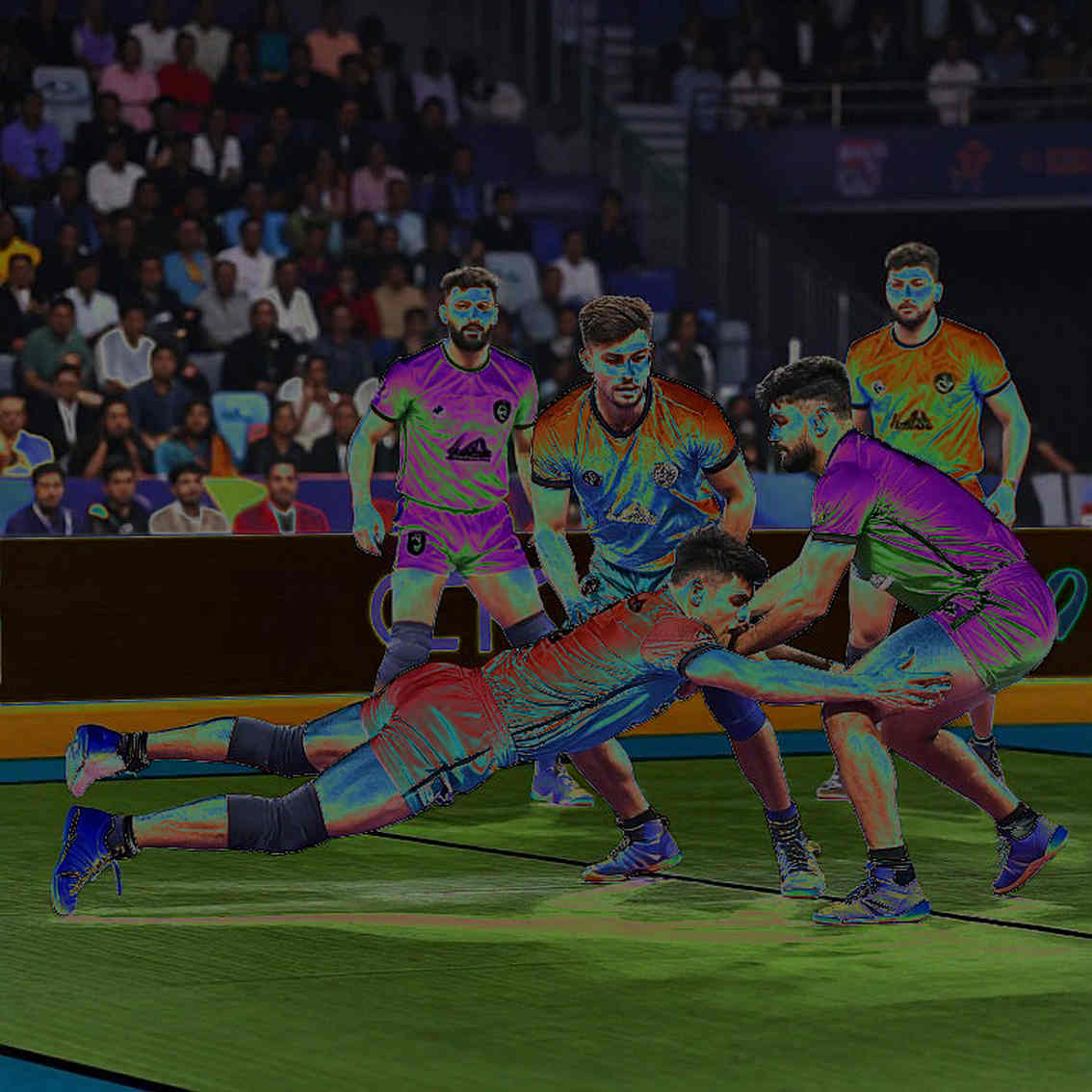
Behind India's dominance there is not only talent but a supply chain — players rising from the soil of Haryana, Maharashtra, Punjab, Uttar Pradesh and Tamil Nadu, then the Pro Kabaddi League auction, then the national team. No other country has built that link between rural density and a professional league. A group-stage win therefore proves nothing about India's strength; the structure already assumes it.
The easiest reading of the scoreline is that a 16-point win means India are excellent and gold is assured. That reading is incomplete, and before a semi-final an incomplete reading is the most dangerous kind.
First, a margin means nothing without naming the opponent. A group-stage win over a catch-up-tier side is structurally low in information. It proves India are functioning; it does not prove India are unbeatable. 37-21 is comfortable control, not annihilation.
Second, India conceded two Super Tackles. When Taipei's defence dropped to three or fewer players, Indian raiders went hunting for touches and were caught. In a seven-man defence those situations usually generate an All Out; here they cost two points. That gap stays invisible against opponents content to survive, but a second-tier defence will make India pay for it. It is a small but real efficiency leak, worth a video review before the knockouts.
Third, what the scoreboard does not show says more. Never being All Out across the match is a genuine signal of defensive resilience — the most positive note of the night. And Taipei's 21 points, scored by a non-South-Asian opponent and containing two legitimate ankle-hold moments, is a small but real marker of internationalisation. There is a bigger story buried inside those two facts, and the scoreline carries no trace of it.
Who India draw in the 25 September semi-final, and which half of the bracket Iran occupies — those two questions will convert today's "unbeaten run" from habit into information. If the rotation continues, India are backing this squad. If the mega-names return, the group stage was an experiment. And whether sides like Chinese Taipei step off the bonus line next cycle and find the courage to break a defence will decide how genuinely wide kabaddi's international circle is becoming. When the noise fades, that is where the real story begins — and a 16-point group-stage win does not contain it.